by Brice Boorman
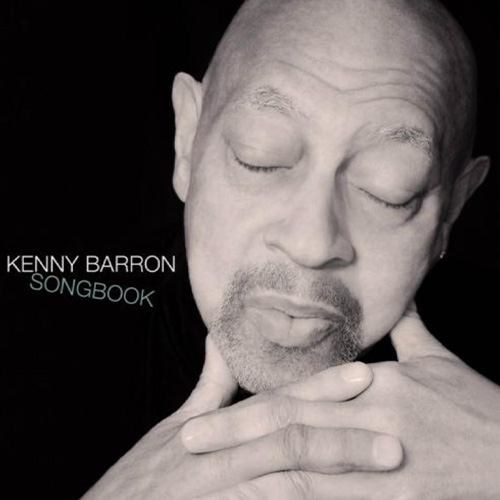
With Songbook Kenny Barron makes a decisive, carefully considered turn toward the voice. This choice is not an embellishment to his catalog but a structural extension of it. Rather than treating lyrics as overlays on familiar compositions, Barron reframes his originals as fully inhabitable songs, built to sustain multiple interpretations while retaining a clear compositional center. The result is a vocal album that feels unified without being uniform, intimate without being insular, and expansive without leaning on legacy framing.
At the core of the project is Barron’s long-standing trio with Kiyoshi Kitagawa on bass and Johnathan Blake on drums, a rhythm section that understands how to stabilize form while remaining reactive. Their role is not to drive the narrative forward, but to hold a flexible frame that allows each vocalist to shape phrasing, pacing, and emotional proximity without pulling the music off its axis. This balance is essential to the album’s success, particularly given the breadth of vocal approaches represented across the tracklist.
Barron’s piano establishes the album’s defining relationship as a partnership rather than accompaniment. His playing consistently responds to the vocal line, adjusting harmonic density and registral placement to support the singer’s phrasing. At moments, he leaves space, letting a vocal fill resolve before re-entering with a soft, clarifying voicing. Elsewhere, he fills the texture with gently voiced harmonies that guide the melodic contour without crowding it. The piano never competes for foreground attention, but it is always present as a shaping force, subtly steering form and feel.
That partnership becomes immediately apparent in the first two opening tracks featuring Jean Baylor, “Beyond This Place” and “Until Then.” Baylor’s gospel-inflected legato style brings a grounded warmth to Barron’s melodic language. Her phrasing aligns closely with the piano’s contours, making the lyrics feel inseparable from the melodic architecture. The sense is not of a singer placed atop a tune, but of a voice moving inside the composition’s existing curves. This integration recurs throughout both performances as a consistent throughline.
Cécile McLorin Salvant’s appearances, particularly on “Sunshower,” highlight the elasticity of Barron’s writing. Her airy, precise delivery brings a heightened sense of intimacy, drawing attention to how sparsely Barron can voice the piano without thinning the harmony. The trio responds by narrowing dynamics and softening articulation, reinforcing a close, conversational atmosphere that defines the emotional temperature.
Contrast emerges not through changes in repertoire, but through interpretive shifts. Kurt Elling approaches Barron’s material with a measured, narrative-oriented phrasing, emphasizing clarity of line and lyric intent on “In The Slow Lane.” Tyreek McDole, by comparison, introduces a youthful edge, allowing rhythmic inflection and improvisational instinct to shape the melody’s profile in “Calypso” and Marie Laveau.” In moments where McDole stretches phrasing or takes melodic risks, the trio subtly adjusts by accenting rhythmic figures or reshaping dynamics in real time, signaling an ensemble that listens closely and responds collectively.
Across the album, lyrics by Janice Jarrett (with the exception of “Minor Blues Redux,” which features lyrics by Catherine Russell) feel purpose-built. The strongest moments are those where melodic direction and lyrical cadence align so closely that the words seem to dictate harmonic pacing. In these cases, Barron’s compositions reveal themselves as song forms capable of absorbing language without compromising musical integrity.
What ultimately holds Songbook together is not the star power of its vocal roster, but the consistency of its internal logic. Despite the range of vocal personalities, from Catherine Russell’s seasoned clarity to Kavita Shah’s nuanced articulation, the album maintains a steady emotional temperature rooted in warmth and intimacy. This cohesion stems from Barron’s compositional voice and the trio’s disciplined listening, which allows variation without fragmentation.
Songbook does not present definitive versions of Kenny Barron’s compositions. Instead, it offers a series of considered readings that demonstrate how his writing can support multiple emotional and stylistic perspectives while remaining unmistakably his own. It is a project grounded in the partnership between composer and lyricist, pianist and vocalist, ensemble and form, and that trust in partnerships gives the album its authority.


 By
By