
by Brice Boorman
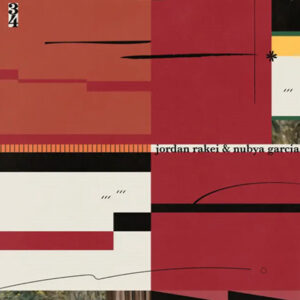
“Monsters,” the collaborative single from Jordan Rakei and Nubya Garcia, takes a different approach. Recorded during Rakei’s Artist in Residence period at Abbey Road Studios, the performance is built around musical architecture, with groove supplying the foundation, recurring thematic material providing structural continuity, and each subsequent musical path growing naturally. The result is a song that feels spontaneous and constructed, demonstrating how a restrained harmonic framework can produce remarkable depth through interaction, pacing, and thoughtful ensemble design.
Rather than relying on conventional verse-and-chorus contrast, “Monsters” unfolds through a series of interacting musical arcs. The rhythm section establishes continuity, Garcia’s recurring saxophone motif serves as the listener’s point of orientation, the modal harmonic language deliberately leaves room for interplay, and the arrangement expands through successive layers of ensemble dialogue. Understanding this blueprint explains why the performance remains cohesive.
The recording opens without rhythmic urgency. Garcia’s saxophone introduces a blues-inflected, delay-colored melody that floats freely over the empty harmonic space, creating an atmosphere that feels exploratory rather than declarative. Instead of functioning as an isolated introduction, this opening statement quietly establishes the thematic material that will guide the composition from beginning to end. As Florence Moore’s bass and Sam Jones’ drums gradually enter, the performance shifts almost imperceptibly from rubato freedom into a deeply settled groove. That transition is one of the recording’s defining achievements. Rather than arriving as accompaniment, the groove becomes the composition’s primary organizing force, determining the pacing and internal momentum long before the vocal enters.
Moore and Jones construct a rhythmic foundation that feels good. Their interaction extends beyond maintaining time, creating a layered conversation in which low-register bass figures, upward-moving fills, and subtly evolving drum patterns generate forward motion without sacrificing stability. Polyrhythmic relationships develop organically, allowing the groove to breathe while remaining remarkably consistent across vocal passages, instrumental sections, and moments of reduced texture. The arrangement becomes increasingly layered, every additional musical layer a stable point of reference.
When Rakei’s warm, soulful vocal enters, the arrangement resists the familiar hierarchy of lead voice supported by accompaniment. Instead, each element assumes an independent role within the larger musical conversation. Garcia continues to weave variations of her opening melodic idea around the vocal line, keyboards introduce descending harmonic figures that move independently of the melody, background vocals expand into layered counterpoint, and the rhythm section subtly adjusts its internal dialogue without disturbing the groove’s underlying continuity.
Garcia’s recurring saxophone theme proves central to that cohesion. Rather than appearing only as an introductory gesture, the melody returns throughout the performance in varied forms, functioning as the composition’s structural memory. Each reappearance subtly reorients the listener, linking contrasting sections without requiring dramatic harmonic change. During the chorus, the motif intertwines with stacked vocal melodies and keyboard textures, reinforcing continuity even as the musical surface grows increasingly complex. T
Garcia’s improvisation grows from the established material, developing ideas the listener already knows. Her phrasing follows the emotional contour established by Rakei’s vocal writing while expanding its rhythmic and melodic possibilities. Multi-octave figures emerge naturally from previously introduced ideas, and the solo’s expressive power comes not from technical density but from narrative continuity. The rhythm section reinforce the musical trajectory, ensuring that improvisation functions as a development.
In the breakdown, the texture contracts, voices briefly stand alone before the ensemble gradually rebuilds itself layer by layer. This passage functions as the composition’s structural hinge, exposing the underlying framework before reconstructing it through successive instrumental entries. The return of saxophone, rhythm section, and vocal layers feels inevitable rather than dramatic because each element reconnects to relationships already established earlier in the performance. Expansion and release become recurring architectural principles rather than isolated production techniques.
The harmonic language remains intentionally restrained throughout. The modal framework directs the listener toward rhythm, thematic variation, and ensemble interaction. Complexity emerges through layered counterpoint, evolving textures, and the independence of individual musical voices instead of harmonic density. This is key in creating space for groove and melodic development to remain the performance’s primary sources of momentum.
“Monsters” demonstrates the musical virtuosity that Jordan Rakei and Nubya Garcia achieve through thoughtful design, allowing groove, recurring thematic material, modal restraint, and collective ensemble listening to function as complementary architectural elements. The performance plays with an organized musical ecosystem, where every voice participates in shaping the whole.There is engaging relationships between rhythm, melody, and interaction to drive the composition, “Monsters” illustrates how the most compelling musical structures often reveal themselves through the elegance of their design.

 By
By