by Nolan Conghaile
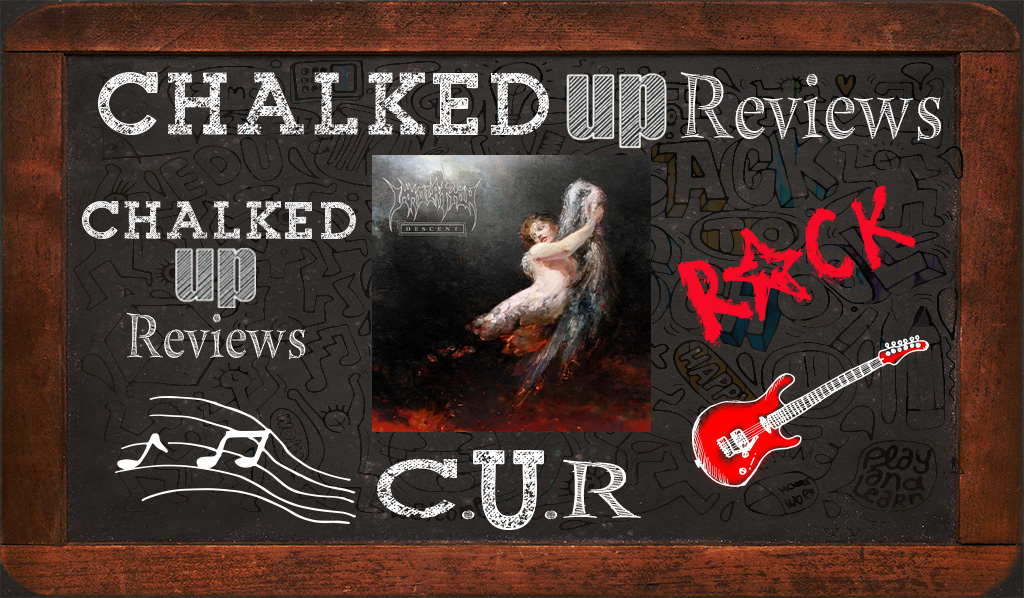
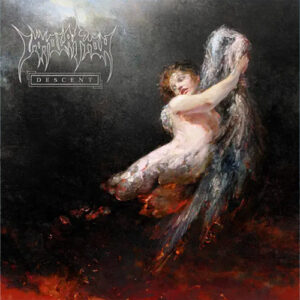
On Descent, Immolation delivers a series of songs filled with interactions. This lets the album play less as a wall of sound, but in a space where each player occupies a distinct role and function. The two guitars don’t collapse into a single mass; they speak from opposite sides, often independently. The bass and vocals hold the center with weight and clarity. And above all, the drums connects the drive.
The placement of the instruments and vocals on the sound stage is what makes the album. Even at its most aggressive, Descent does not blur. You can hear the left-right distinction of Robert Vigna and Alex Bouks’ guitars. One articulates a figure while the other answers or reinforces. Their parts interact to create a sonic field that is in motion.
At the center, Ross Dolan’s vocals and bass function as the core. His singing is strong with low, guttural detail and rhythmically locked into the pulse with clear articulation. The bass, meanwhile, anchors the harmonic weight, allowing the guitars to move more freely without losing cohesion.
But the real architect of Descent is Steve Shalaty.
Across the album, his drumming and double bass passages establish momentum. He pivots the song’s energy with tom-driven grooves, quarter-note emphasis, or shifting subdivisions that subtly alter the feel beneath the riffs. These patterns provide a medium for the material to live in. A riff that feels driving in one context can feel suspended or collapsing in another, depending on how the drums frame it.
This is where Descent reveals one of its most compelling traits: groove as a moving target.
Many sections begin with a clear sense of footing. A section starts with a chug, a pulse, a mid-tempo lock that feels stable. But that stability is developed through small rhythmic shifts, metric modulation, or changes in emphasis. The listener is pulled into a space where groove is where the body locks in to the drum structure, and the music builds from there, through movement.
“Adversary” introduces this dynamic in concentrated form. The track moves between tightly chugging guitar figures and surging waves of vocal intensity. The drums act as a distinct guide, allowing each transition to feel like an organic flow. What begins as forward motion becomes a series of waves of vocals and instrumental sections that crash, recede, and return.
“Attrition” expands the palette through pacing. The interplay between sustained low-register weight, harmonic tension, and mid-tempo pulse creates a sense of unified movement. There is a dark walking presence through a heavy atmosphere in this one. The groove feels grounded as the sections evolve, and subtle shifts in parts let the music evolve. The two guitar parts work out very nicely with each other.
By the album’s later stages, Immolation pushes their sound further with a series of songs that change in the way they create the sensation of momentum without actually releasing energy. Every element has a role. Every shift has a purpose. The density is real, but it is organized, distributed across space, guided by rhythm, and anchored by a strong center.
Descent will overwhelm as it engages your senses. It asks the listener to track movement, to feel where the vocal is, and to notice when the setting around it begins to shift. And in those moments Immolation achieves something more nuanced than brute force. They create motion you can follow.

 By
By