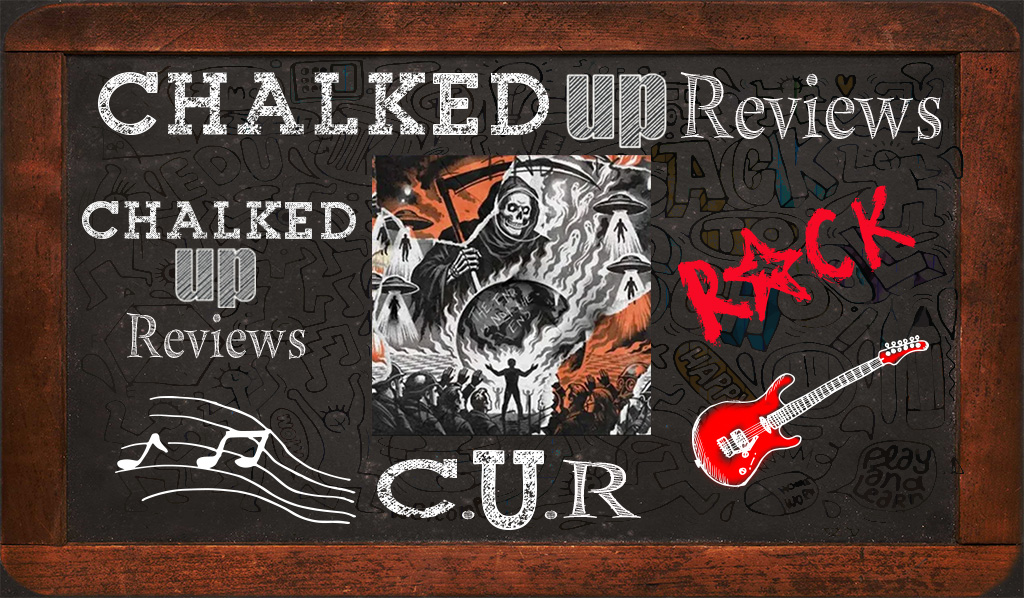
by Nolan Conghaile

Atreyu’s The End Is Not the End keeps changing the way its appeal lands. A riff locks into tight palm-muted punches for a few bars, Kyle Rosa cracking the snare on two and four underneath it, and then the guitars suddenly peel into harmonized lines or suspended chords that define the groove for a second longer than expected. The album is heavy. No question. But what stands out more is how often the band interrupts that heaviness. Guitarists Dan Jacobs and Travis Miguel create the force that pulls the songs open and back down again. Letting the power strike when the iron is the hottest.
The title track starts with sustained guitar tone, but the arrangement doesn’t stay pinned to blunt aggression for long. Multi-layered guitar figures start threading through the middle of the mix while the drums move between full-band hits and rolling fills. It feels restless already. Then the double-bass drum groove kicks in and the guitars spread wide into a thick block of aggression. Other times in the track, one guitar holds a chord while the other pushes a melodic figure across the opposite speaker. You can hear the interaction between the parts.
Acoustic guitars. No drums. No bass. Just two clean guitar lines sitting apart in the stereo field with a faint keyboard sustain underneath them. When the harmonized lead enters after that break, the scale shape pulls slightly outside the expected movement and the heavy return hits harder because the tension has already been stretched out beforehand.
That push-and-release pattern keeps showing up all over the album. “Break Me” rides a medium-tempo chug riff with a bend hanging off the end of the phrase, but the chorus refuses to stay boxed into pure rhythm. The muted attacks suddenly open into ringing held chords while delay trails smear around the clean vocal line. Rosa doesn’t force nonstop double bass through the section either. He place it with purpose.
The harmonized legato guitar section later in the song works because the guitars never stop carrying the pulse underneath the melody. The distortion stays warm enough that both guitar parts remain distinct, and the phrasing slides between articulated picked notes and smoother connected runs without snapping the momentum in half. A lot of bands separate melody and aggression into different sections. Atreyu keeps letting them happen at the same time.
“Glass Eater” gets closest to the album’s real center. The opening riff snaps with the drums so hard it almost turns the guitars into percussion instruments, but the track doesn’t stay there long. Clean guitars enter. The drums pull back. The upper-register clean vocal hangs for a few seconds before Rosa slowly rolls the toms and snare back underneath the arrangement again.
The expressive bends between the guitars actually sit there for a beat before the next chord pushes in. That hesitation changes the feel of the whole section. Same thing in “Ego Death.” The solo works less because of speed and more because the phrasing keeps shifting shape underneath the groove. One guitarist throws out a bluesy bend, the other answers it, then both slide into harmony together before the rhythm drops into a looser triplet swing. Even the pinch harmonics feel tied to the motion of the riff instead of sitting on top of it like decoration.
A lot of the album’s best moments happen when the rhythm section adjusts around the guitar movement instead of trying to overpower it. “Ghost In Me” opens with a delayed clean-guitar figure before the heavy chug finally crashes in, but once the chorus arrives, Rosa eases off the rigid double-bass drive and lets the guitars widen into held chords. The power still punches. The snare still cuts through the center of the mix. But the feel changes because the guitars stop stabbing and start ringing.
McKnight’s bass adds to the build too. He rarely pushes himself out front, but he thickens the harmonic movement without muddying the guitar lines. Especially in “Ghost In Me,” where the darker stepwise guitar movement starts pulling the song downward harmonically while the bass quietly reinforces the shift underneath it.
Not every breakdown lands perfectly, though. A few of the vocal unison sections arrive a little too predictably, especially when the arrangement leans on repetition instead of letting the guitars keep reshaping the tension. You can hear the difference immediately because the strongest parts of the album usually come from movement. Saturated chord voicings widening, harmonized leads slipping in before the riff.
“All For You” handles that balance as the riff comes in, then suddenly disappears during the pre-chorus so the keyboards can hold the harmonic space by themselves for a few seconds. When the chorus hits, the guitars don’t return as a giant blur of distortion. They widen underneath the vocal hook instead. Later, during the breakdown, the repeated “I did it all for you” line keeps changing shape because the guitars keep changing shape around it. Tightening. Opening. Pulling back again.
Even the softer material follows the same logic. “Wait My Love, I’ll Be Home Soon” starts in acoustic ballad territory, but the pulse comes from muted guitar chords pushing against the sustained keyboard tones underneath them. At the ends of phrases, the muting releases and the guitars briefly flare outward into melodic lines before settling back into the groove. When the distorted guitars finally enter later in the song, they don’t explode so much as deepen the resonance already there.
Not when it’s trying to prove how heavy it is. Not when the breakdowns get bigger. The strongest moments come when Jacobs and Miguel keep the riffs moving internally. Together shaping the distortion before the next section locks back into place again.
The End Is Not the End has power. What sticks are smaller things. The held bend at the end of the “Break Me” riff. The harmonized guitar phrases drifting through “Glass Eater.” The acoustic guitars sitting apart in the speakers during the title track before the distortion folds back in again.
The riffs never stay locked in one shape for very long, and the album is better because of it.

 By
By