By Brice Boorman
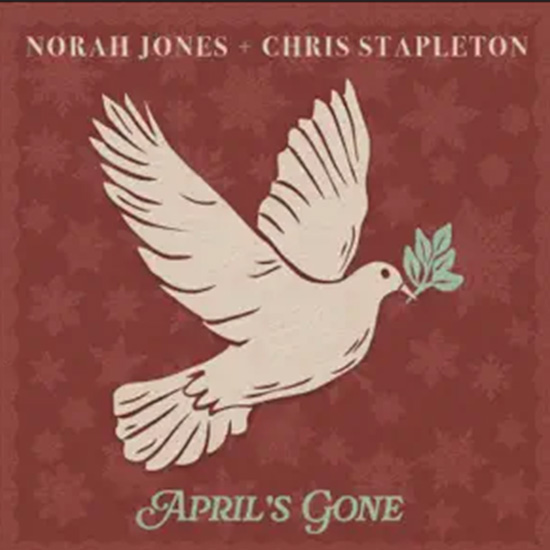
The connections between gospel, blues, jazz, and country are often heard in the smallest details of a performance. Familiar harmonic movements, melodic inflections, and rhythmic gestures offer musicians a common foundation while leaving plenty of room for personality. Norah Jones and Chris Stapleton explore that relationship in “April’s Gone,” a Christmas duet whose character emerges through their individual approaches to a shared melody.
Written by Jones and Leon Michels, who also produced the recording, the song unfolds over a relaxed, gospel-inflected groove. The harmonic movement draws upon familiar tonic, subdominant, and dominant relationships, while pentatonic melodic shapes invite the bends and embellishments associated with blues and country singing. Gently swung eighth-note phrasing brings another dimension to the rhythmic character. Rather than emphasizing stylistic differences, the music finds the common ground where these traditions meet.
Jones begins with “in the spring,” a three-note gesture that leads into a sustained tone. She lets the note settle before introducing a slight pause and a pickup into the following phrase. Downbeat accents mingle with syncopations, giving her delivery an easy conversational flow. Elsewhere, the connection between pitches becomes equally expressive, including what is expressed as a major-third slide that recalls a pedal steel guitarist shaping a melodic line. Her interpretation depends less on what the notes are than on how she moves between them.
Stapleton follows with comparable melodic material, but his rhythmic instincts take him in another direction. The opening notes arrive more quietly, followed by a quicker approach to the sustained tone. His accents and slurs carry greater dynamic movement, particularly in an extended gesture that grows from restraint into a fuller sound. The shape resembles the expressive arc of a horn or bowed string phrase. Jones and Stapleton are working with much the same musical materials, yet their choices of timing, articulation, and intensity give each verse a distinct personality.
The arrangement leaves space for these individual interpretations. Piano, pedal steel guitar, harmonica, bass, and drums establish an understated roots-oriented setting, allowing the vocal lines to remain central. As the separate verses give way to shared harmony, their differences become complementary. The musical development also serves the narrative, following a relationship through changing seasons toward the possibility of reconciliation at Christmas.
There is something enduring about this approach to American song. A familiar melody can accommodate two distinctive voices without either surrendering its identity. Jones and Stapleton demonstrate how a slight hesitation, a carefully placed accent, or the shaping of a sustained note can make an emotional statement. By the time their voices meet, the music has already expressed something essential about connection. “April’s Gone” carries its Christmas message through those human details, finding warmth in the possibility of coming together again.

 By