
by Nolan Conghaile
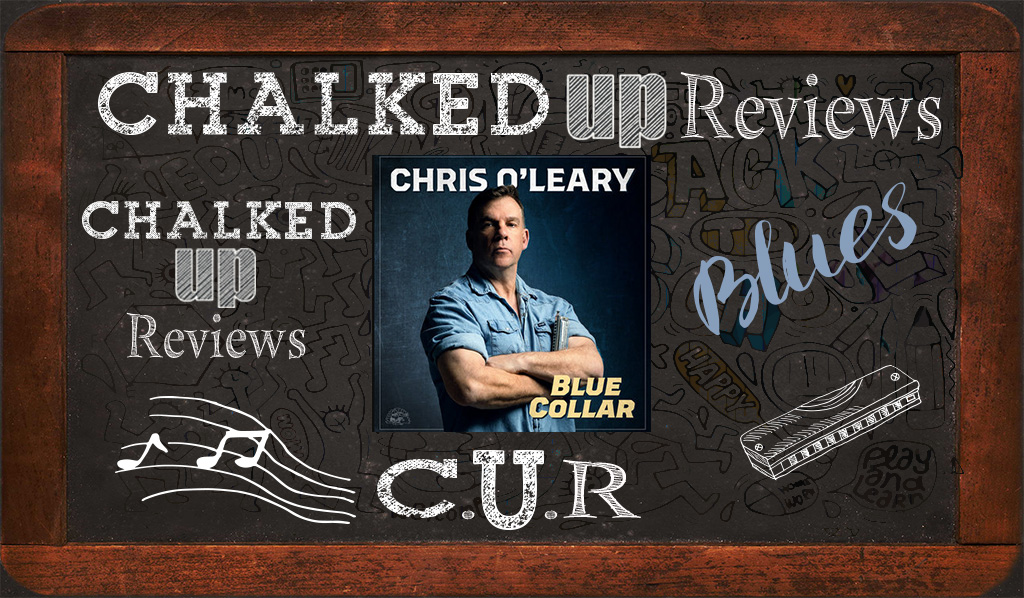
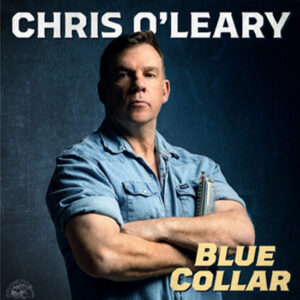
Chris O’Leary knows the blues well enough to know which parts of it can move. That distinction drives Blue Collar, an eleven-song collection that is deeply invested in traditional blues language without treating tradition as a set of fixed instructions. Shuffles give way to driving sixteenth-note rhythms, New Orleans syncopation and spacious slow blues; horns, piano, slide guitar and harmonica alter the instrumental landscape. The record’s continuity comes from something deeper: form, groove and ensemble arrangement establish the boundaries, while phrasing, interaction and personality continually redraw what can happen inside them.
“Bad Decisions” establishes that sound from the beginning. Rodrigo Mantovani and Chuck Cotton lock into a traditional shuffle while Bronson Hoover’s keyboards supply fills and blues color around O’Leary’s vocal. The setting feels familiar, but the architecture is already flexible. The vocal sections move through a sixteen-bar blues form, while the solos contract to twelve bars before the melody returns to sixteen. The transition feels natural as the musical language remains intact.
O’Leary’s singing and harmonica reinforce that continuity. His vocal embellishments develop naturally with each pass through the form, colored by blue notes and glissandos rather than applied as ornamental effects. His harmonica speaks much the same language: soulful in tone, grounded in traditional vocabulary and shaped by inflection. Voice and harp emerge as two expressions of the same musical personality. “Bad Decisions” consequently establishes an important premise for everything that follows: structure can bend without weakening the blues identity.
“One More Cup Of Coffee” puts this into an eight cylinder engine with a driving sixteenth-note blues pulse, with Hoover, bassist Shiela Klinefelter and Cotton pushing the feel while Lil’ Ed Williams brings a warmly distorted slide-guitar voice to the arrangement. O’Leary works with a catchy Mixolydian melody, and that simplicity becomes an advantage. He creates character through rhythmic accents, falls and changes of emphasis.
The chorus makes the ensemble relationship even clearer. Call and response turns O’Leary’s vocal into an exchange with the band, while Williams’ fills occupy the spaces around the melody without interrupting its momentum. When the guitar moves forward for its solo, the rhythm section keeps the same drive underneath it. The song demonstrates that expressive freedom does not require an elaborate harmonic environment. A stable melodic and rhythmic foundation can provide more room for personality when the musicians know how to manipulate articulation, placement and tone.
Then “One Way Street” changes the surroundings with its syncopated rhythmic cues, horns and a persistent snare-march character establishing a New Orleans orientation from the opening. The instrumental palette expands as Pat O’Shea and Greg Gumpel handle guitars, Andy Stahl and Ron Knittle contribute saxophones, and Luke Kirley adds tuba and trombone around the rhythmic foundation of Mantovani, Cotton and Hoover. Piano, trombone, guitar and horns rotate through fills, hits and background figures, giving the arrangement movement without simply making it denser.
What matters is how naturally O’Leary inhabits this new environment. Against a melody centered largely around G minor, he creates personality through phrasing, including expressive octave jumps at the ends of lines. The relatively stable melodic center leaves space for rhythm and articulation to carry more of the expressive burden.
His harmonica solo is especially vivid. The excitement comes not simply from the riffs but from what O’Leary does with time. He digs into phrases, delays certain gestures and drags others against the pulse, allowing the tension between his phrasing and the underlying groove to become part of the blues expression itself. The guitar solo reaches into the same vocabulary through bends and blues-based phrasing. The rhythmic environment has changed substantially from “Bad Decisions,” but the expressive grammar has not.
That leads Blue Collar toward its most interesting question: How can a musician remain firmly inside the blues tradition without allowing tradition to become a restriction? O’Leary’s answer is not to escape the tradition but to understand which parts of it can move.
“How’d I Ever Get Along?” brings that idea into the exposed space of a slow blues. The horns remain, but their function changes as the tempo opens the arrangement. The form stretches through an extended turnaround, while O’Leary leans into a gravelly vocal tone, measured rhythmic placement and tasteful vibrato. At this pace, every attack, held note and silence carries additional weight.
The guitar solo begins with a slightly jazzier chordal color before moving toward the expressive language of a blues ballad. But some of the track’s most effective arranging occurs after the solo, when band hits frame the form and leave additional space around O’Leary. Instead of filling that space, the ensemble uses it to concentrate attention. O’Leary responds by digging further into the vocal, his phrasing becoming more passionate precisely because the arrangement gives him room to do so.
Across these contrasting settings, the musicians reveal the album’s organizing principle. O’Leary self-produced Blue Collar, and despite its sizable supporting cast, the record does not depend on sheer instrumental density. Players and colors are deployed according to the needs of individual songs. Pat O’Shea and Greg Gumpel contribute different guitar textures across the album; Hoover and Jesse O’Brien divide much of the keyboard work; bassists and drummers change according to track; and saxophones, trombone, tuba and accordion expand the available vocabulary. Guests Bob Margolin, Lil’ Ed Williams and Wayne Toups further connect particular songs to established blues and roots traditions without turning their appearances into detached showcases.
Through those changing configurations, O’Leary’s voice and harmonica provide the most consistent expressive signature. Both depend heavily on inflection with blue notes, glissandos, bends, falls, vibrato and accents, but rhythm may be the crucial element. O’Leary can push an upbeat melody through sharply articulated phrases, playfully work against a driving groove, or drag a harmonica line against a New Orleans pulse. In a slow blues, that same rhythmic instinct becomes an ability to inhabit the spaces between ensemble gestures.
There is something fittingly workmanlike about that approach. Blue Collar draws its identity not from displaying the blues as an artifact but from treating the tradition as working knowledge. Forms and gestures have been absorbed deeply enough to be adjusted according to what an individual song demands. That distinction also explains why the album’s stylistic breadth feels coherent. A twelve-bar form is not the blues by itself, any more than a shuffle, bent note or harmonica riff is. O’Leary locates the tradition in the relationships among those materials: in the way a rhythm section creates ground beneath a singer, the way a horn hit alters the pressure around a phrase, the way call and response turns repetition into conversation, or the way a soloist can pull against the beat without surrendering the groove.
The apparent contradiction at the center of Blue Collar therefore proves to be its strength. The record sounds rooted because its musicians do not confuse roots with immobility. O’Leary does not modernize the blues by distancing himself from its conventions, nor does he demonstrate authenticity by freezing them in place. He and his band make those conventions useful.
On Blue Collar, tradition survives not because the framework remains untouched, but because O’Leary and his musicians know exactly how far it can bend.

 By
By
 By
By