by Nolan Conghaile
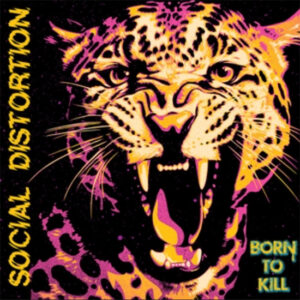
Most comeback albums arrive carrying the weight of expectation. Born to Kill, Social Distortion’s first studio album in fifteen years, arrives carrying something more difficult: the challenge of proving that continuity can still matter.
For veteran bands, extended absences often create pressure to reinvent, modernize, or otherwise justify their return. Social Distortion chooses a different path. Rather than treating the passage of time as a reason for transformation, the band treats it as an opportunity to reaffirm the musical identity it spent decades building. That decision ultimately becomes the album’s greatest strength.
Created in the wake of Mike Ness’s recovery from cancer treatment and released after one of the longest studio gaps in the band’s history, Born to Kill could easily have leaned on comeback mythology. Instead, Social Distortion allows the music to make its case. Across eleven songs, the band embraces the blend of punk-rock urgency, roots-rock storytelling, country-rock textures, and classic rock craftsmanship that has long defined its sound. The result is not an album of reinvention, but one of confidence, a record that succeeds because it understands exactly what kind of band it wants to be.
The title track establishes that mindset. Guitar feedback expands into a wide, backbeat-driven arrangement. “Born to Kill” is a reaffirmation with its call-and-response guitar figures, strong chorus, and hard rock melodic phrasing demonstrating the band values craft. “No Way Out” reinforces the point. Built around a straightforward hard rock rhythmic foundation, the song gains momentum through subtle development. Ness’ singing is strong as he sounds completely at home in this environment. The guitars alternate parts, allowing familiar material to evolve without abandoning its identity.
That idea becomes central to the album’s sound and appeal. Rather than creating variety through disruption, Social Distortion creates variety through development.
Throughout Born to Kill, songs don’t move with stylistic pivots or radical structural departures. Instead, songs and arrangements grow organically through changing guitar figures, dynamic shifts, vocal inflections, and evolving band parts. Simple musical ideas develop into something greater than the individual parts. That discipline allows the album to remain recognizably Social Distortion at every turn while avoiding the stagnation that can sometimes accompany artistic familiarity.
The band’s continuity is expressed through recurring songwriting and ensemble-arrangement patterns. Whether drawing from punk, southern rock, country rock, roots rock, or classic rock traditions, the underlying musical language remains remarkably consistent. Songs are built around complementary instrumental roles, memorable melodic hooks, strong backbeat grooves, and arrangements that prioritize clarity over excess.
The recurring interaction between Mike Ness, Jonny Wickersham, Brent Harding, and David Hidalgo Jr. provides an example of the band’s enduring ensemble language. The dual-guitar interplay between Ness and Wickersham frequently anchors the arrangements, with one guitar establishing the rhythmic framework while the other supplies fills, counterlines, or melodic commentary. Yet the effectiveness of those parts depends equally on the rhythm section beneath them. Harding and Hidalgo Jr. rarely demand attention, but their steady grooves, strong backbeats, and well-timed dynamic lifts repeatedly give the songs their sense of forward motion. Together, the four musicians create an ensemble vocabulary that allows stylistic variations to emerge naturally without sacrificing cohesion.
Several songs illustrate this particularly well. “The Way Things Were” leans into southern-rock textures and story-song storytelling while balancing more active sections against open, spacious passages. “Crazy Dreamers” broadens the album’s palette through stacked vocal harmonies, piano textures, and a communal atmosphere that functions as one of the record’s most distinctive moments. “Never Goin’ Back Again” shifts toward a swinging roots-rock groove, while “Tonight” borrows from heartland and southern-rock traditions. Yet none of these songs feel like stylistic detours. Instead, they demonstrate the band’s ability to explore multiple corners of its musical vocabulary while remaining unmistakably itself.
The album is equally effective when balancing energy and reflection. Hard-driving material such as “Born to Kill,” “No Way Out,” and the closing “Over You” delivers the grit and propulsion longtime fans would expect, while songs like “Walk Away (Don’t Look Back)” and “Don’t Keep Me Hanging On” reveal a more measured and mature perspective.
Both tracks showcase the band’s songwriting discipline. “Walk Away (Don’t Look Back)” continually refreshes its core ideas through subtle shifts in texture, phrasing, and instrumental interaction rather than dramatic structural changes. Rhythmic passages give way to more sustained moments, guitars converge and separate, and small variations in Ness’s delivery create a sense of development throughout the song. Likewise, “Don’t Keep Me Hanging On” distinguishes itself through a clear structural contrast between rhythmically active verses and sustained, melodic choruses. Neither song relies on complexity for its impact; both succeed because every arrangement decision serves the song.
Ness’ voice has never depended on technical virtuosity, and Born to Kill shows little interest in pretending otherwise. Instead, Ness succeeds through interpretation and phrasing. Throughout the album, he injects personality into repeated lines through subtle embellishments, phrase-ending variations, conversational inflections, and carefully placed melodic shifts. His greatest strength is not vocal power but credibility. Whether delivering the defiance of the title track or the reflective moments elsewhere on the record, he sounds fully invested in the material. That authenticity continues to be one of Social Distortion’s most valuable assets.
The production reinforces the band’s philosophy and sound. Rather than chasing contemporary rock trends or emphasizing sheer loudness, the album favors warmth, separation, and space. Guitars occupy distinct positions within the stereo field, drums feel expansive without becoming oversized, and the arrangements are allowed room to breathe. The mix consistently supports the songs rather than competing with them, emphasizing clarity and balance over modern excess.
If there is a criticism to be made, it is that the same confidence that gives Born to Kill its coherence occasionally limits its capacity to surprise. Listeners hoping for a dramatic stylistic evolution may find the album’s commitment to established territory overly comfortable. The cover of “Wicked Game” represents this. While competently arranged and supported by tasteful instrumental work, the performance feels less natural than the band’s original material, briefly revealing the limitations of applying Social Distortion’s established strengths to a song built around a very different vocal sensibility. It interrupts the album’s momentum, though not enough to undermine the strengths surrounding it.
Born to Kill shows longevity is sustained through confidence, craftsmanship, and a deep understanding of artistic identity. Social Distortion does not return after fifteen years with a radically new vision of itself. Instead, the band returns with something arguably more difficult to achieve: the discipline to continue refining an established musical language while keeping it engaging.
Born to Kill offers Social Distortion returning with the band’s commitment to craftsmanship, ensemble cohesion, and song-first writing. The core sound of the band ensures that the identity it reaffirms remains worth hearing.

 By
By